Turtle NIL Changes The Game
Doug Dull, One Maryland Magazine Contributing Writer
2/24/2023
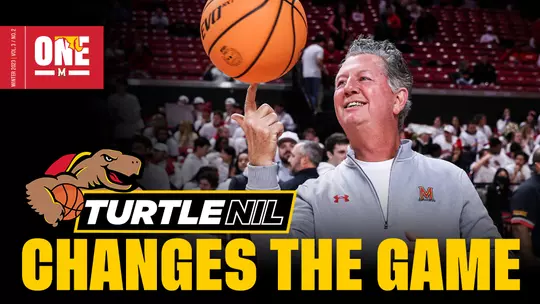
The Winter 2023 issue of ONE MARYLAND Magazine recently arrived in the mailboxes of Terrapin Club members. ONE MARYLAND features stories of strength and perseverance, of determination and spirit. These stories define our athletics program, and this new magazine will allow us to share these stories with you. Over the next few weeks, we will be rolling out these stories on umterps.com as a preview of what you will find in ONE MARYLAND. To receive future issues of the magazine when they debut, please join the Terrapin Club. We hope you enjoy.
Harry Geller is perfect for this.
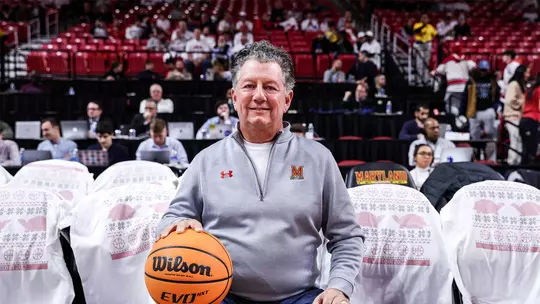
The Class of ’81 graduate has turned his career-long talent for entrepreneurship into a vital program of assistance for the Maryland men’s basketball team. He is the driving force behind the Turtle NIL collective and the Turtle Athletic Foundation – both programs designed to provide for Name, Image and Likeness funding for student-athletes.
For the past two seasons, collegiate student-athletes have been able to receive money for use of their name, image or likeness from businesses, community service projects, merchandise sales or other opportunities. The NCAA has mandated that university athletic departments must not be involved in soliciting funds or the management of these programs.
This is where an expert and 30-year Terrapin Club member like Geller becomes so valuable. Having founded more than a dozen multimillion-dollar companies, he was an entrepreneur-in-residence at the Robert H. Smith School of Business’ Dingman Center for Entrepreneurship.
“When the NCAA announced the opening of the Name, Image and Likeness program for amateur athletes, Coach (Mark) Turgeon said he didn’t know how to manage this,” said Geller. One of Geller’s most popular lecture series was how to start a business in three days for less than $1,000.
“I talked with Coach and said we should just form a direct marketing agency, and I could put this thing together in three days. I knew I had to put my money where my mouth was. In three days we had the URL, the trademark, the IRS number and the website.
“Our initial thought with Turtle NIL (www.turtlenil.com) was we would raise some funds from the very engaged boosters, particularly in basketball,” Geller said. “We would use that money to help find marketing deals for the players where they could capitalize on their name, image and likeness.”
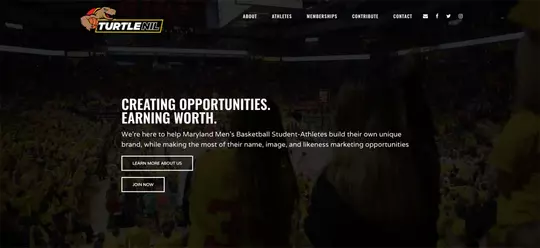
Geller went to the basketball players, primarily the starters, and explained the plan.
“I said to them, ‘Gentlemen, you hear about these million-dollar deals, and it would be nice to get you guys that much.’ But the true value of a college athlete isn’t a lot other than locally – particularly in this area where you have seven or eight professional teams you’re competing with for the same marketing dollars.
“But if we could get $2,000 to $3,000 a month, would they be happy with that? And they were all ecstatic... So we formed what probably became one of the first collectives in the whole country.”
The bulk of the money came through meet-and-greets and merchandise sales, according to Geller.
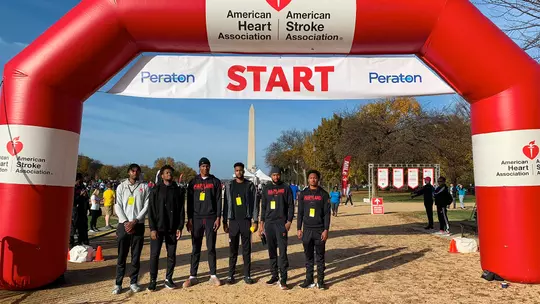
The Turtle Athletic Foundation (www.turtleathleticfoundation.org), which is related to Turtle NIL, is another mechanism for NIL funding for the men’s basketball players. The foundation, a registered 501(c)(3) organization, is focused on creating opportunities for players to become involved with community service organizations or projects.
Turtle NIL Club provides fans with exclusive access and content while allowing our Student-Athletes to earn compensation for their name, image, and likeness. Subscribe today at https://t.co/5zjEseWowD to get involved! pic.twitter.com/yCqH5Gwypj
— Turtle NIL (@TurtleNIL) February 15, 2023
All the players are extremely appreciative of whatever deals we can do. There has never once been a problem.Harry Geller,
“We thought, this is a better model. It helps the charity and helps the players see the other side of life,” said Geller. “Most of our funding and direction is toward the charitable events.
“We mainly focus on underprivileged schools and school-age kids, Special Olympics and things like that. We’ve had players shoot baskets with Special Olympics. We’ve had a player do a point-guard clinic in Prince George’s County for underprivileged kids.
“So it’s been really helpful and it’s very rewarding,” said Geller. “But we’ve also had events where they’ve done promotions at businesses and been paid either in-kind or with money.
“All the players are extremely appreciative of whatever deals we can do. There has never once been a problem.”
Geller said when he accepted the task of creating the collective and the foundation, the message from the university administration was clear about staying within guidelines.
“The athletic department contracts out to an NIL management company called Opendorse, which handles the compliance,” Geller said. “We run every deal by them and they’ve said ‘You guys are paying fairly, you’re paying market rate and you’re not paying someone 10 times what their market should be.’
“When I started this, both Damon Evans and President Pines said, ‘We know we don’t need to say this to you, but we’re saying this to you. Don’t do anything that’s going to get any of us in trouble.’ Kevin Willard also wants to be up-and-up. I meet with them frequently about what we can do and what we can’t do.”
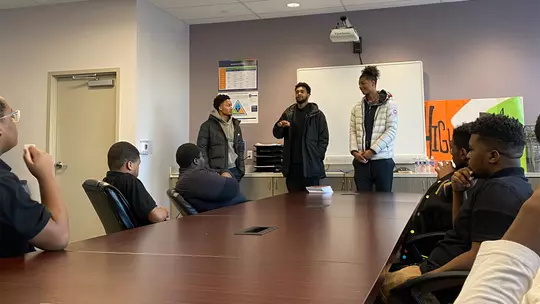
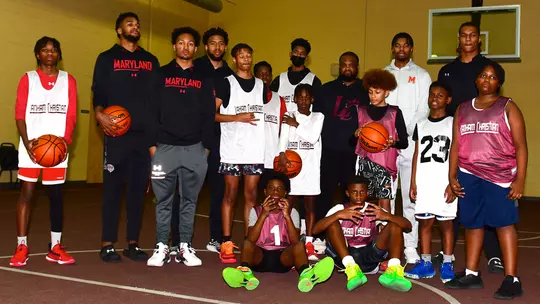
Geller said there are collectives that have been developed to aid other sports at Maryland. But the focus of both himself and some other long-time boosters has been aiding the men’s basketball program.
“We’re just a bunch of passionate boosters trying to help Coach Willard field a successful team,” Geller said. “No one is profiting off this.
“We’re extremely happy that these kids, particularly ones from low-income backgrounds, are getting some money. It’s a good thing. It’s life-changing for some of them.”
Doug Dull (Maryland ’81) was the Associate A.D. for Communications at Maryland from 2003-12. He is a past president of the College Sports Information Directors of America and was inducted into its Hall of Fame in 2016. Dull spent nearly 30 years in college athletics and received CoSIDA’s Lifetime Achievement Award in 2020.