Maryland Football’s Swiss Army Knives: Dorian Fleming and Preston Howard
How two tight ends’ pasts are paying dividends in the Maryland offense.
Brady Ruth, Staff Writer
10/8/2026
Everyone sees the quarterback change the play at the line of scrimmage.
They see him turn toward the offensive line, signal an audible, then sprint toward the receivers and running backs to make sure everyone is on the same page.
He is, after all, the captain of the offense.
But there’s even more happening just a few feet away — the kind that rarely gets the same attention.
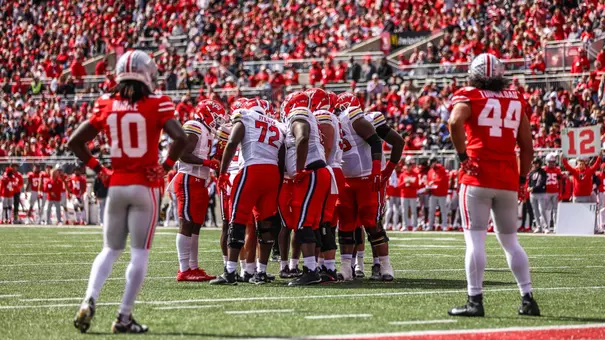
Along the offensive line, the tight ends are constantly processing and adjusting. Before the ball is snapped, they’re reading the defense, identifying responsibilities and making sure the five-man front is ready for whatever is coming next.
It is a steady stream of information, much of it happening in seconds.
Most of it goes unnoticed.
The toughest thing about playing tight end is the mental aspect,” Preston Howard said. “A lot of people don't know, but we probably have to know the second most behind the quarterback on the offense. We have to know the run game. We have to know the blocking game. We have to know who the quarterback is reading on certain plays.Preston Howard
There’s a whole lot going on in Maryland’s tight end room. It’s a position group that head coach Michael Locksley and offensive coordinator Clint Trickett rely on often and take great pride in.
“Over the years, the tight end position in this system is one of those positions that is a multi-faceted position,” Locksley said. “It plays in the backfield, it plays detached as a wide receiver. It plays in line as a blocker up front. Over the years, we’ve had some guys, and a lot of them that have been good have come out of the quarterback room.”
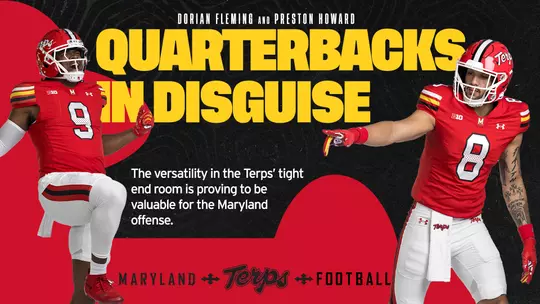
The same can be said about this year’s tight end core. Two Maryland ends — Howard and Dorian Fleming — are both former high school quarterbacks, and their previous experience is paying dividends for the Terrapin offense.
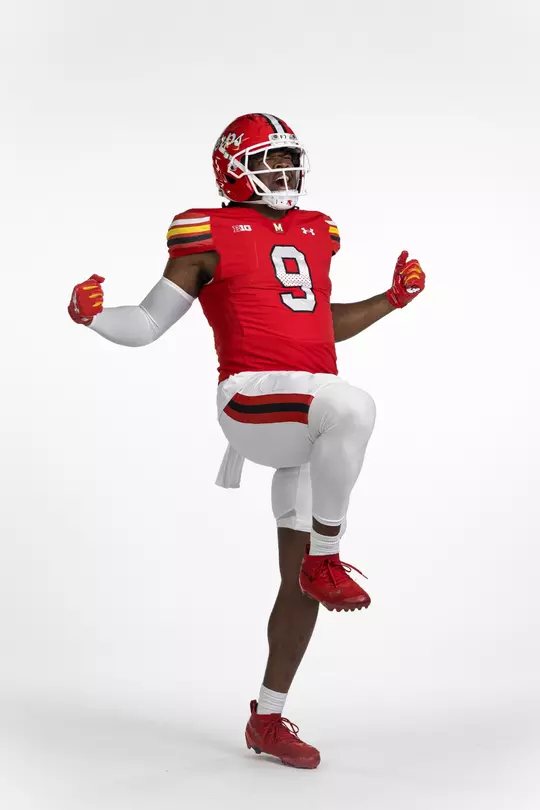
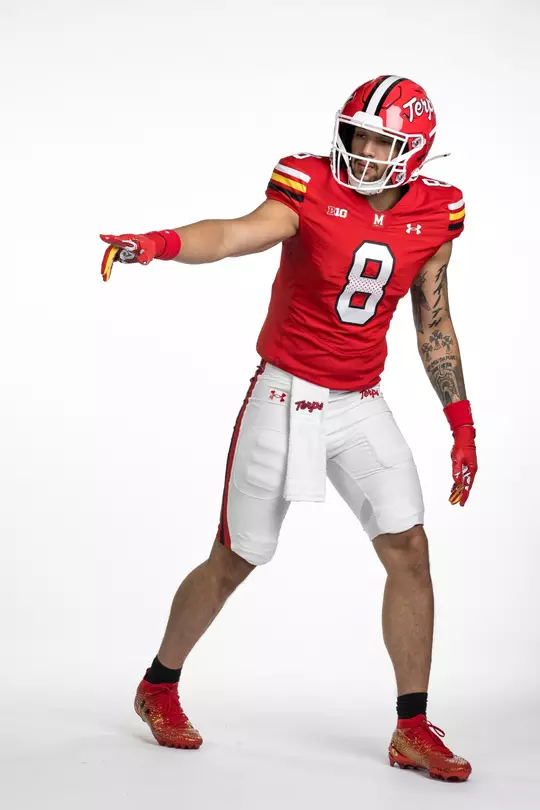
“They have to know as much as the quarterback,” Locksley said. “This is the position that we put a lot of stress on in our offense that we run. They're in the run game, the pass game, they're in the backfield, they're detached as receivers. They have to have a wide variety of skills.”
Versatility wasn't exactly new to Fleming. He’s had it since high school. During his breakout junior season at Life Christian Academy, he threw for 733 yards and six touchdowns, rushed for 312 yards and five touchdowns, caught 340 yards and three touchdowns and recorded 27 tackles on defense.
Dorian Fleming reaches the end zone for the first time in 2026. https://t.co/e6uN1XLRwU
— Maryland Football (@TerpsFootball) September 20, 2026
We're kind of like a Swiss army knife. We can do anything on the field. I loved quarterback, but tight end was the best choice for me in college. I'm able to translate my quarterback skills into helping me out being a tight end as far as knowing where I have to get into the zones, into those holes and just being able to learn all the language and motions and stuff we have to do as a tight end.Dorian Fleming
With limited roster spots on a football team, the value of a versatile player is hard to overstate.
“Dorian has been one of those guys that has done a bunch of things for us,” Locksley said. “He continues to create value and it has really helped us be more efficient on offense.”
Howard also was a leader in the backfield before becoming a leader on the line. He played both football and basketball at McDonogh High School. As a quarterback, he posted a 21-4 record, earning All-State recognition.
The two draw on their quarterback backgrounds in each practice.. They know the game — and Trickett’s offense — inside and out, showing that they still haven’t lost their signal-caller skill sets.
“Dorian and I played quarterback, so we're both very smart on the football field,” Howard said. “The conversations we have, you would think we're quarterbacks sitting in the tight end room.”
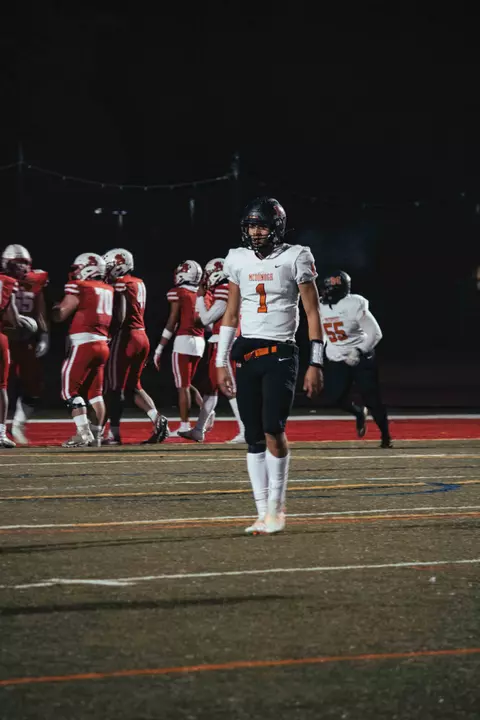
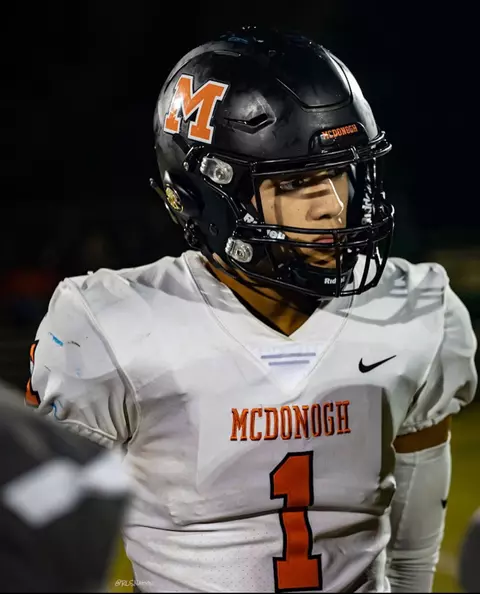
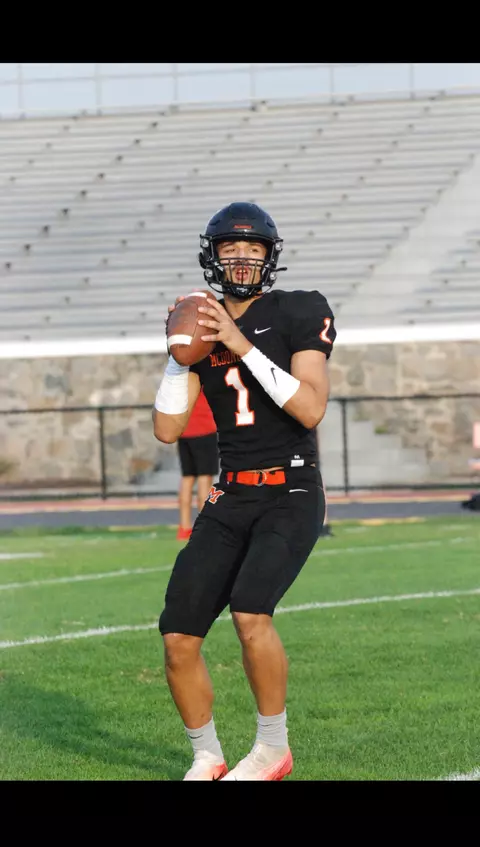
It’s a complex role. Each snap has countless moving parts with very little time to get them all in motion.
“We have to look at the sideline,” Howard said. “Then we have to listen to Malik. Then we have to listen to the line. It's a whole process in just a matter of seconds.”
For Howard and Fleming, the transition from quarterback to tight end hasn’t meant leaving that part of their game behind.
If anything, it has given them another way to use it.
They still see the field like quarterbacks. They still process the game like quarterbacks. They just do it from a different spot on the formation.
And for Maryland, that perspective has made two former signal callers into valuable pieces of an offense that asks its tight ends to do a little bit of everything.