

Capital One Field at Byrd Stadium
Capital One Field at Byrd Stadium, nestled in the corner of the University of Maryland?™s campus, has been home to national championship men?™s lacrosse and football teams.
Starting with the 2013 season, Capital One Field at Byrd Stadium will be home to the the "coolest" synthetic turf field in the nation. The privately funded FieldTurf Revolution surface features exclusive new heat-reducing technology - CoolPlay - which, coupled with the patented silica sand and cryogenic rubber infill, will provide the facility with the "coolest" infill technology. FieldTurf has done extensive temperature testing which shows that CoolPlay infill provides for a difference of up to 15 degrees Fahrenheit versus traditional rubber infill systems.
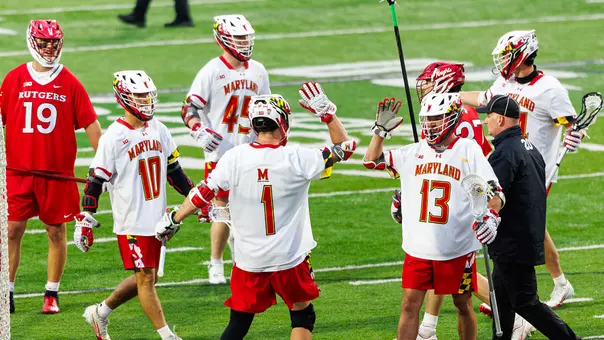
Capital One Field at Byrd Stadium served as the host to the Queen of England at a football game, and was the stage where the greatest high hurdler in history, Renaldo Nehemiah, performed his amazing feats. It also was a regular site for the NCAA Men?™s Lacrosse Final Four, where several attendance records were shattered.
Capital One Field at Byrd Stadium ?“ it?™s the first-class home to the Maryland Terrapins and has recently gone through a major upgrade which makes it one of the top collegiate facilities in the country.
Situated at the foot of the campus?™ North Hill, the stadium is named for Dr. H.C. Byrd, a multi-sport athlete as an undergraduate who later became head football coach and eventually served as university president. His vision gave University of Maryland preeminence among Eastern campus sports facilities for decades and the impetus for the Terrapins to win more ACC championships than any league school.
Since opening on Sept. 30, 1950, Byrd has undergone a number of major facelifts, three of which occurred in the 1990s. The first came in 1990, when the Tyser Tower press box ?“ a five-tier, 90-foot high, 160-foot long structure ?“ was built on the stadium?™s south rim.
A bronze Terrapin sits in front of the team house, its installation coming in 1992. Following the 1994 campaign, Byrd?™s seating capacity increased by more than 12,000 to 48,055 when a massive upper deck was added on the stadium?™s north side. The cost for the renovation exceeded $45 million. With the addition of temporary seating ?“ which took place in 2001 and 2002 ?“ the stadium?™s capacity expanded to house more than 51,500 fans.
The refurbishing of Byrd included new restrooms, bleachers and the stadium?™s first formal entranceway off of Field House Drive. The concession stands, restrooms and stadium portals, designed by H.O.K. Architects of Kansas City, are enclosed in sand-molded brick that matches the Williamsburgstyle brick used on most of Maryland?™s 335 buildings. The brick gives the contemporary architecture a timeless veneer and unity with the university?™s traditional Georgian look.
Prior to the 2006 season, Maryland Athletics entered into a partnership with Chevy Chase Bank for naming rights for the field. Just prior to the 2009 season, the name of the facility was changed to Capital One Field at Byrd Stadium.
The recently completed $50.8 million upgrade to Byrd began in November 2007 and included the expansion of Tyser Tower along the South concourse, allowing for the addition of 64 suites. Additionally, new mezzanine seating for 440 patrons was added, as well as a University suite for 200 guests. There are new work areas for the television, radio and print media, coaches and game-day staff, as well as improved seating for disabled customers.
In addition, the recent expansion, which increased the stadium?™s capacity to 54,000, included a state-of-the-art scoreboard on the west concourse, which was unveiled prior to the 2008 season.
