The Bigger Picture: Cirovski Helps Grow the Game
8/29/2016 12:00:00 AM | Men's Soccer
By: Adam Zundell, Contributor to Maryland Athletics
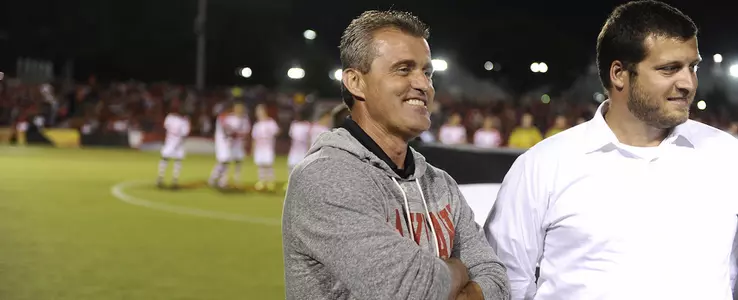
COLLEGE PARK, Md. - At age 17, Sasho Cirovski turned down a professional soccer contract. Instead, he chose college soccer for the first time. It would be the first of many times in his life that he would chose the college game above all else.
After his time as a player at Wisconsin-Milwaukee was up, he played professionally for a bit in Canada, but what he really wanted was to be was a teacher. He loved education, and of course he loved the game, so what proved to be the best intersection for those two passions was coaching. Again, Cirovski chose college soccer and started his career as an assistant at his alma mater. It didn't take long for him to become a head coach, and it didn't take him long to win. He started at Hartford and led the school to its first back-to-back NCAA Tournament appearances in school history.
He was not treating Hartford as a stepping-stone. He had designs on building the program into a soccer powerhouse in the East. They say to make the big time where you are, and that was exactly what he was going to do. That was until the love of his life, Shannon Higgins, sent him a fax with the men's soccer job opening at the University of Maryland. It was a not-so-subtle hint from Higgins, who was the head coach at George Washington, that she wanted them to be closer, which was exactly what he wanted as well.
He went hard after the job. And if you ask anyone – anyone – if they would bet against Sasho Cirovski when he wants something, they'll gladly keep Mr. Andrew Jackson tucked deep in their pocket. He got the Maryland job, beating out the likes of Steve Sampson and Bob Bradley, and it was now the Terps that were going to be the soccer powerhouse.
And, of course, that came true. Piece by piece, Cirovski sold top recruits on a vision, one that included national championships and packed stadiums. A vision that, to be honest, seemed as close as another galaxy based on Maryland's recent history in the sport. Maryland didn't have pristine facilities, complete scholarship funding, or even a trace of a local following. But Cirovski was telling them to ignore that past, to keep an eye on what could be – what will be – and they believed him. They believed in him.
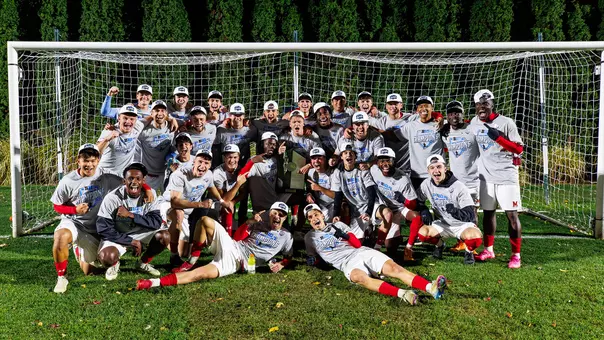
The winning seasons started stacking up one on top of the other. The national championships came, first in 2005, and then again in 2008. Players who would go on to play at the highest levels of international and professional soccer first celebrated goals with the raucous fans at Ludwig Field.
Cirovski is known for pushing everyone around him to be better. He tells the story of his early days at Maryland and the poor playing surface at Ludwig Field. The brash coach could've created an adversary in the grounds crew after telling them that the turf was unsafe and unacceptable, but the opposite happened.
“They [the grounds crew] looked at me like I was crazy when I told them the field wasn't worthy for my team to play on,” Cirovski says. “But when they saw my commitment and passion for my players, they went out of their way to give us the best field in the country. One of them, Bunk Carter, later thanked me for pushing him to be great at his job.”
It was a push – a firm push for sure – but not a shove. His approach can be equal parts persistent, passionate, annoying, endearing and effective. Virtually everyone who has come into contact with him has a “Sasho story” in which he's convinced them to do something more. It's the approach he uses with players, coaches and administrators to not just get things he wants, but things he needs, to make for a better experience for his players and the game.
Cirovski tells all his players that being a part of the Maryland program is being a part of something bigger than yourself. It's not about one player, one team, or one season. It's about a collection of young men, who over time, excel in all facets of life and make things a little better for the next group.
Cirovski heeds his own words as he takes the same approach to his role as a college soccer coach. It's not just about his program or personal success; it's about improving the game he loves for the people he cares about. He could focus singularly on his program and championships and a new soccer stadium. But once again, he's chosen college soccer. He knows he's a part of something bigger, and he takes his role as an advocate for the college game more seriously and assertively than anyone in the country.
“I truly believe in the mission of the NCAA,” he says. “The beauty of combining academics, which I believe are vital, and sport is unique and beautiful. I'm thankful to the University of Maryland for giving me this opportunity because part of the reason I've got an opportunity to be an advocate for the game is due to the success that we've had here.”
His self-awareness of this role came into focus at perhaps his lowest moment in his coaching career. He had just been sent off with a red card at the 2002 College Cup with everyone watching, including his wife and three daughters. He felt as if he let a lot of entities down – himself, the university, his family, and the game. He didn't want to be remembered for that moment. Those groups deserved more, and he would see to it that they got it.
So in addition to all he was doing for Maryland soccer in terms of winning, exposure, fundraising and facilities, he soon became chairman of the men's soccer NSCAA coaches committee, a title he has not treated idly in the 14 years he's had the position. He helped engineer national exposure for the college game by creating a “Game of the Week” television package. He would later be the key force in the creation of the NSCAA Program Director position that has helped be a singular voice for all college soccer issues. The television package and director position at the NSCAA would've been “enough,” but as is his tendency, Cirovski still pushes for more for the college game.
“Thank goodness for him,” says Schellas Hyndman, Cirovski's friend and colleague and former NSCAA men's soccer chairman. “When I was the rep, my first priority was my team. When Sash did it, he was a maniac – a bulldog. We would all have ideas but think that none of them would get done, and then he got them done. We all love him because he's a doer.”
His latest endeavor is easily his most ambitious: moving the college soccer season to what is termed the Academic Year Season Model. Currently, the college soccer regular season runs from August until November with 20 games being played in that time with teams playing three times in a week more often than not. (Conference tournaments and the NCAA Tournament run into December.) Programs then have an “offseason” in the spring that still consists of practices and workouts as well as exhibition games. The plan that Cirovski is spearheading largely only reorganizes the hours that student-athletes are already putting into their sport in both semesters.
But that simple reorganization that spaces out games across six months instead of three has huge benefits. First is the fact that student-athletes can enjoy a more balanced academic regimen with games being spread across two semesters with a bulk of those contests played on weekends to help reduce missed class time. Also, the overall physical health and wellness of the student-athletes increases with fewer games being played with less than 48 hours of recovery. That benefit also extends to the quality of the games as players are rested and recovered prior to the next competition.
This point is of key importance when it comes to the championship portion of the season. Consider that the College Cup final, which should showcase the best of the best, is now played less than 48 hours after the semifinals in the throes of December. Under the new model, the final will be played with a full week of rest in the much more temperate climate of late spring, which creates a much more suitable set of circumstances to get a quality game and champion.
“Having the championship in the current format with the semifinals on Friday and the finals on Sunday violates the best practices for sports science when it comes to principals for rest and recovery,” Cirovski says. “We think that a championship in the spring, with more time to recover and play a final, will lead to a much more fulfilling student-athlete experience.”
There are challenges to extending the college soccer season – facilities, professional opportunities, maintaining the attention of fans – but, according to Cirovski, the pros so far outweigh any opposition that extending the college soccer season is “the biggest no-brainer in history.”
And now he's in full “push” mode. In conjunction and coordination with the NSCAA, he's created a video that complements all of the medical research, comparative data between the two models as well as coach and player surveys. Cirovski, who was part of a group that first broached the subject in the late 90s but was promptly rejected, believes that now the time is right to make this happen.
“The process has been much more inclusive this time around,” Cirovski says. “We have involved all of the stakeholders – coaches, players, doctors, administrators, the NCAA – in the discussion. Part of the reason we are this far in the process because 90 percent of the coaches and 70 percent of the players want this to happen, and even those numbers will go up with increased education and inspiration.
“The narrative has changed [since 1999],” Cirovski says. “Health and wellness is at the forefront of everyone's mind, and there is an open-mindedness from institutions and the NCAA that wasn't there before.”
The issue isn't a Sasho Cirovski issue, but he can't ignore doing the right thing. Just like improving the turf at Ludwig Field so many years ago was the right thing to do for his players, the extension (or decompression) of the college season is the right thing to do for the sport.
“I've made a great living through the college game, and I just want to continue to make it better for the next generation of coaches and players. I really feel like it's become my calling to help grow the game.”
His leadership, both at the University of Maryland and for college soccer, is centered around passion and compassion. He routinely says that “people don't care how much you know until they know how much you care.” There's no doubt that everyone knows he cares deeply for Maryland and the college game, and that's allowed him to make the immense impact that he has on both.